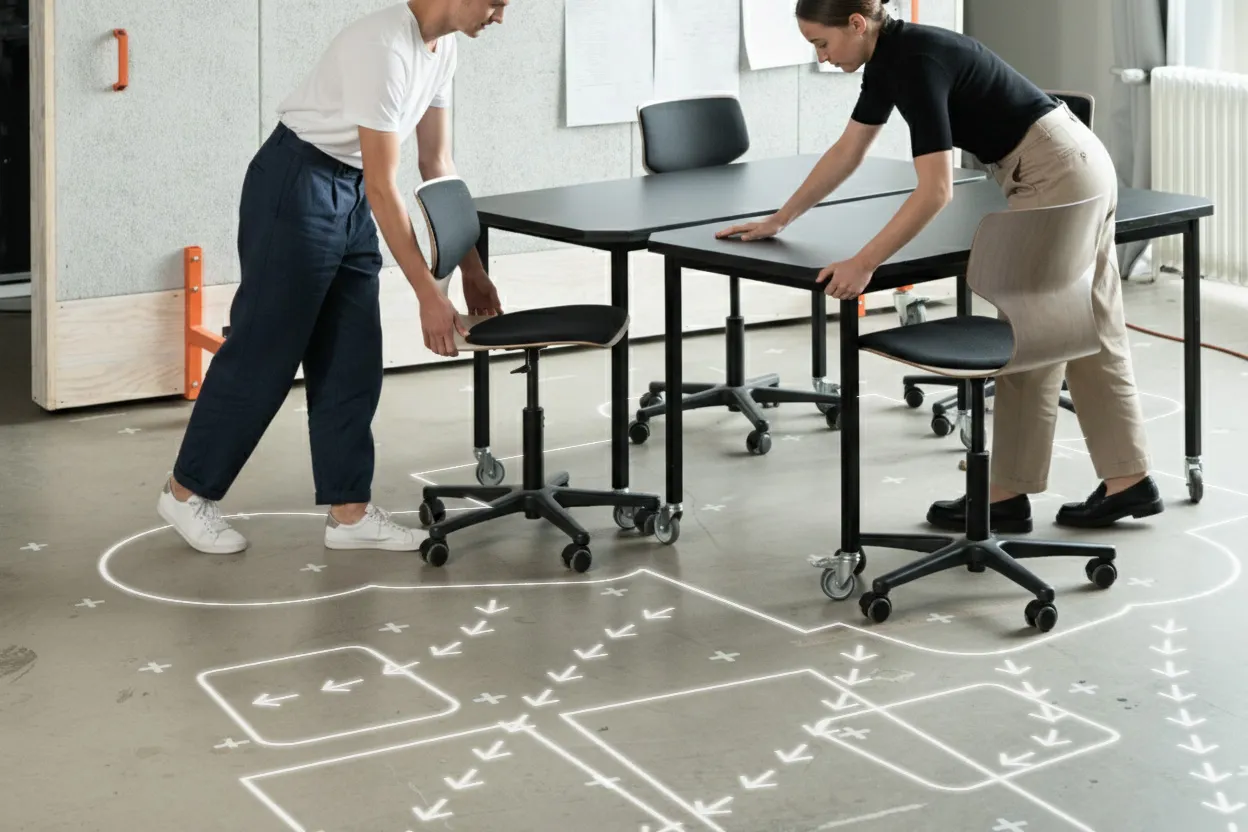
AISI INVESTIGATES HOW BUILT ENVIRONMENTS CAN BECOME INTERACTIVE INTERFACES.
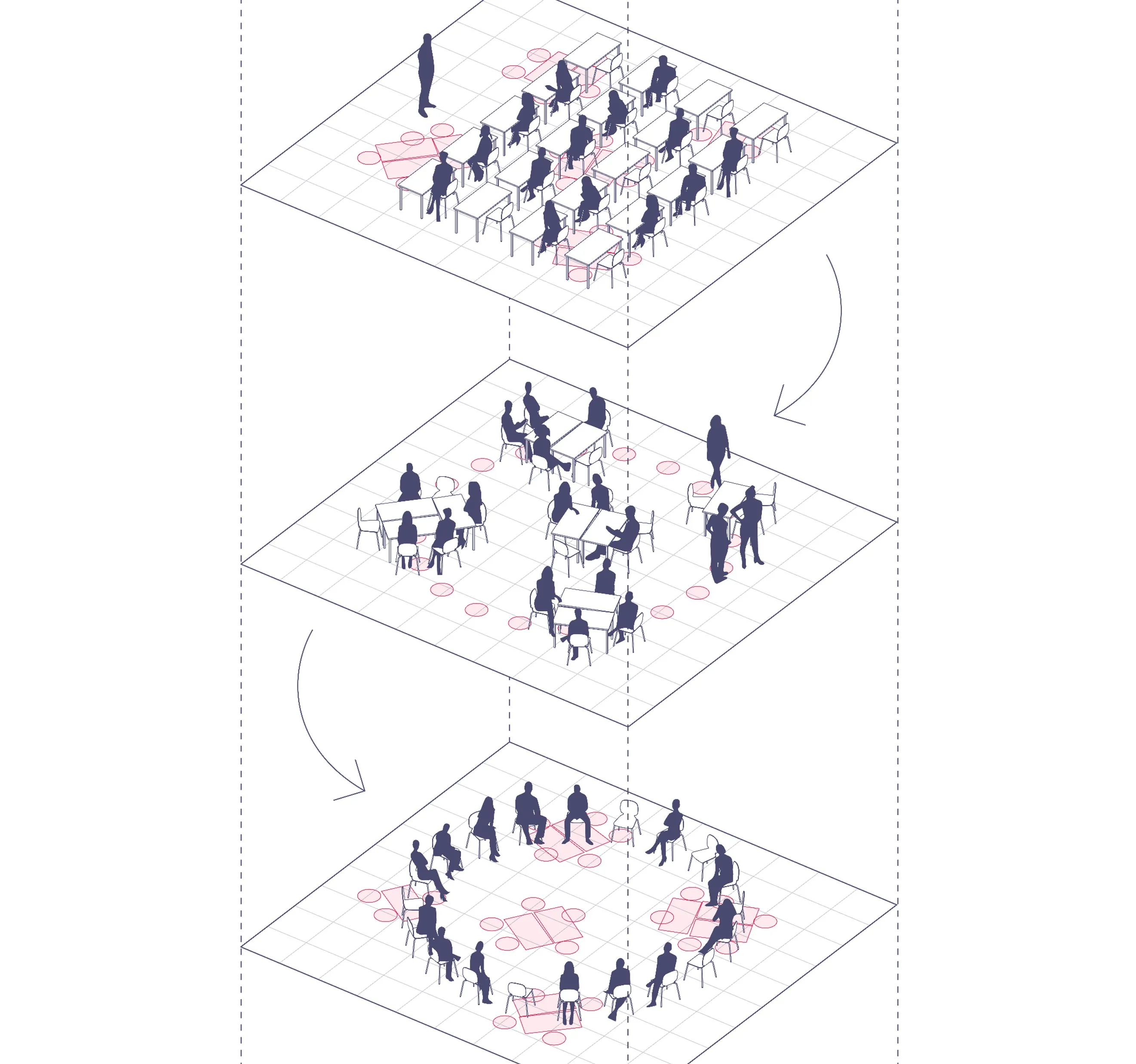
AISI (AI Space Interface) is an experimental research prototype at the intersection of spatial design, artificial intelligence, and human–computer interaction. Developed as part of Johannes Pointner’s doctoral research, the project investigates how built environments themselves can become interactive interfaces. It begins from the observation that adaptability is currently located primarily within digital systems, while the material and social configurations of physical spaces remain largely static. AISI therefore aims to dynamise not only the space itself, but also the ways in which it is used: transitions between different learning, working, and collaborative formats should become easier to initiate, negotiate collectively, and implement in practice.
System and Interaction
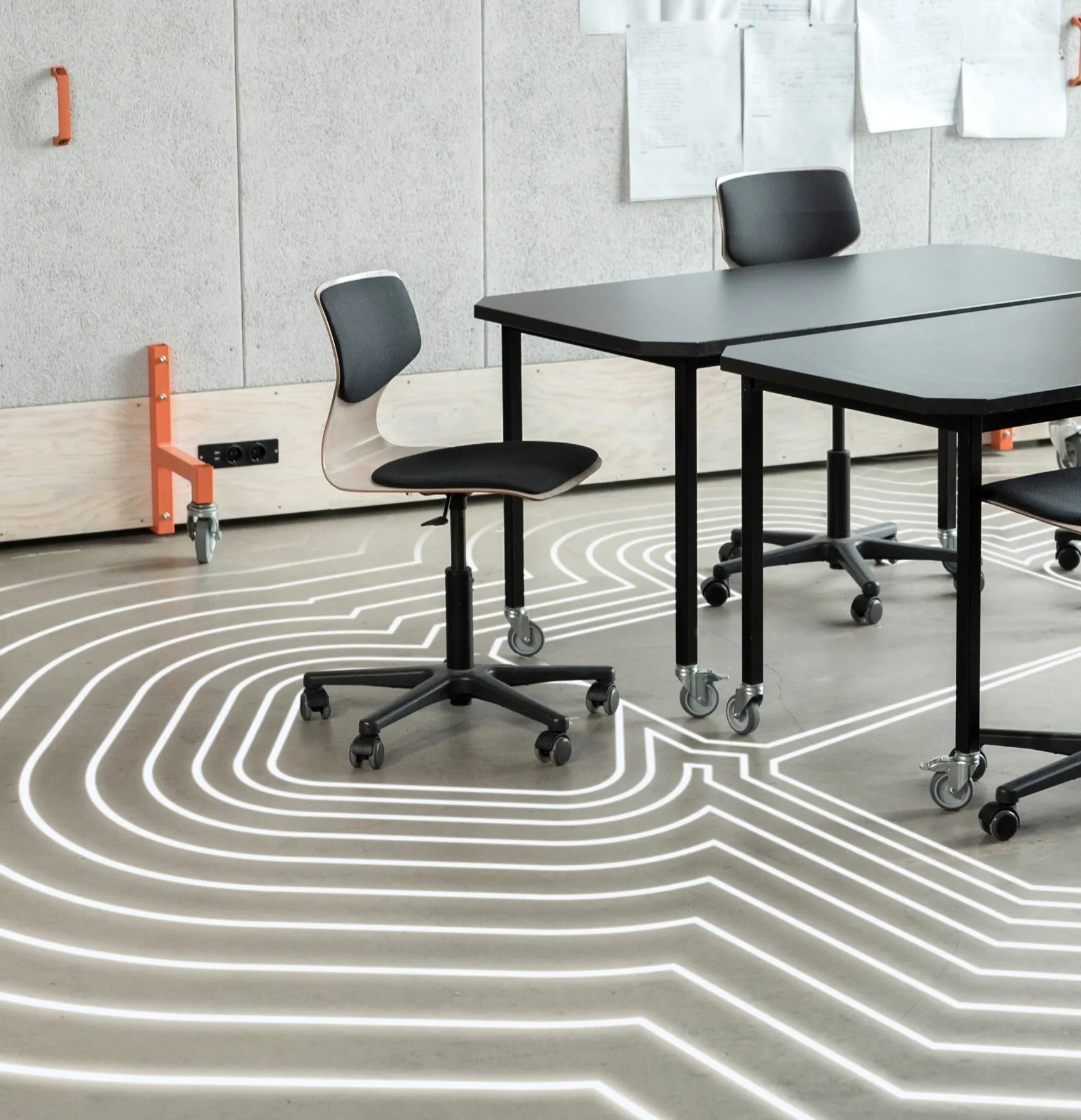
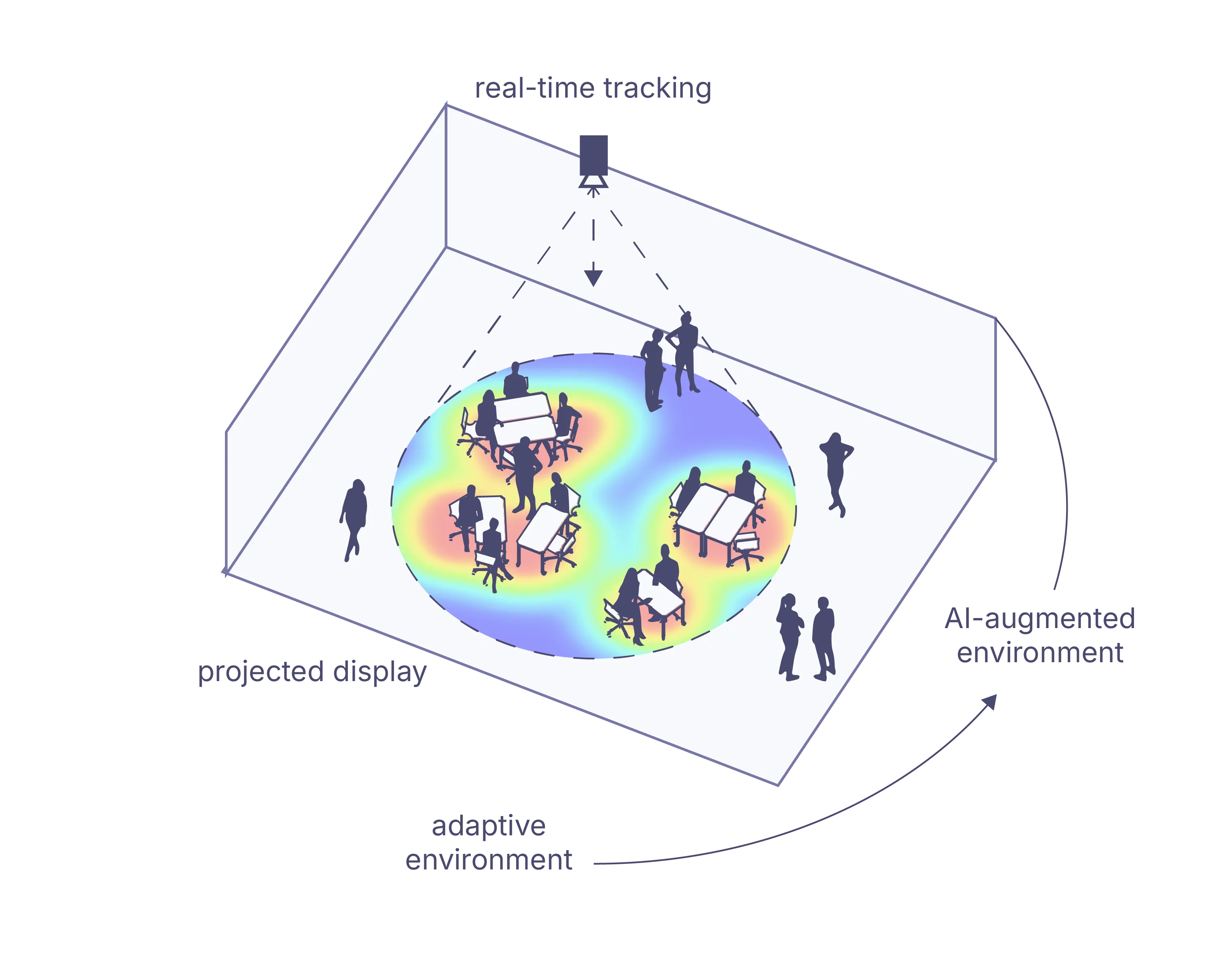
AISI captures the arrangement of people, furniture, and spatial elements and translates selected relationships—such as positions, orientations, groupings, densities, and unoccupied areas—into a digital scene model. On this basis, the system interprets existing spatial situations, generates possible alternative configurations, and communicates them directly within the space through projection.
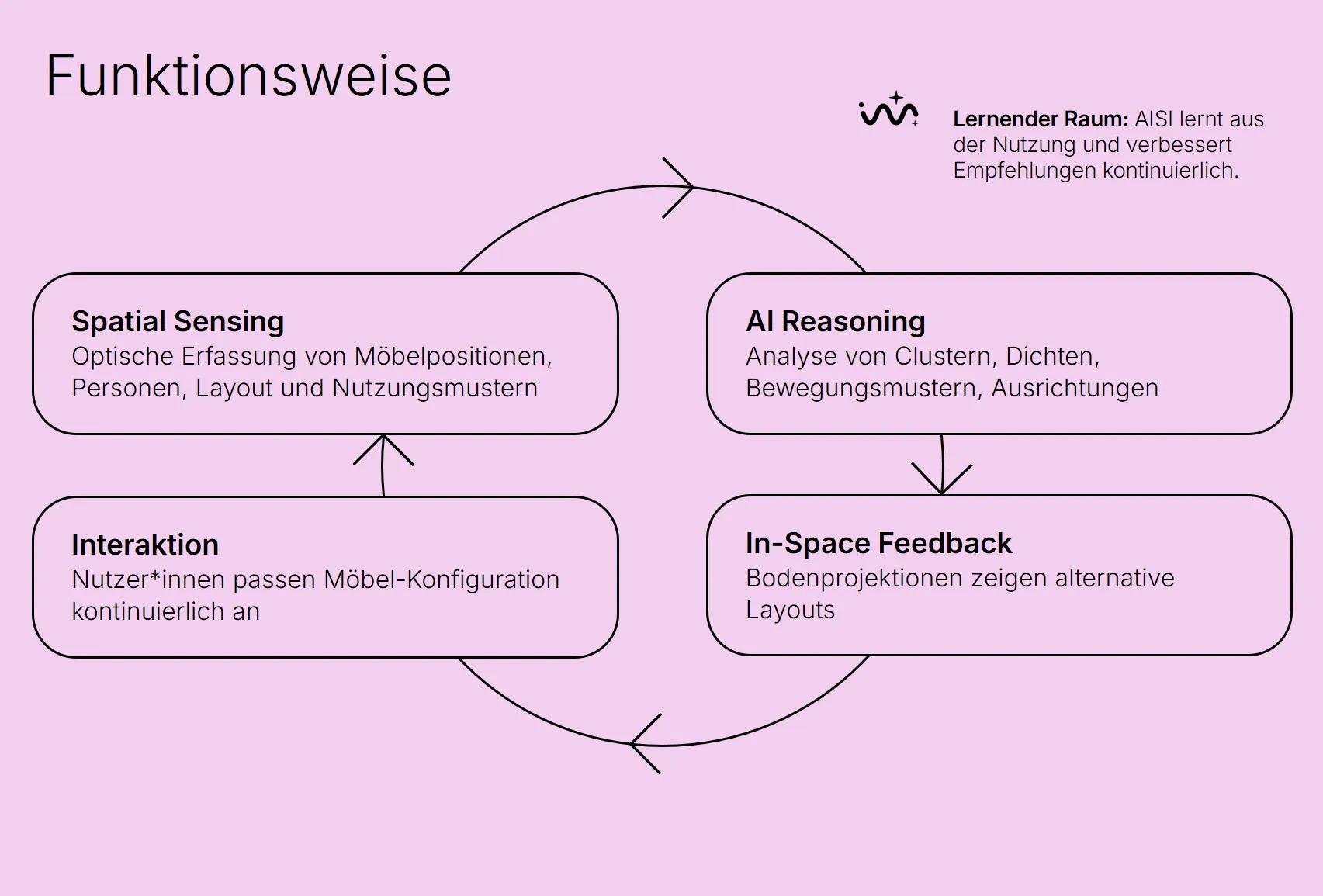
Suggested target positions, directions of movement, and spatial options thus become collectively visible and can be implemented, adapted, rejected, or replaced with alternative solutions by the users. Interaction therefore does not primarily take place through an individual screen interface, but through shared perception, bodily movement, spatial coordination, and collective reconfiguration.
Research Through Design
The prototype investigates how AI-supported systems can selectively perceive and interpret complex situations without replacing human capacities for interpretation and action. Central questions concern the transparency of algorithmic recommendations, the appropriate timing of interventions, the collective intelligibility of spatial feedback, and the practical feasibility of proposed changes.
As a research-through-design infrastructure, AISI combines theoretical inquiry, system development, experience prototyping, and empirical testing. The technical operationalisation itself becomes an object of research: Which aspects of a situation can be modelled? Which normative assumptions are inscribed into the system? And which dimensions remain outside its representation?
Implementation and Partnerships
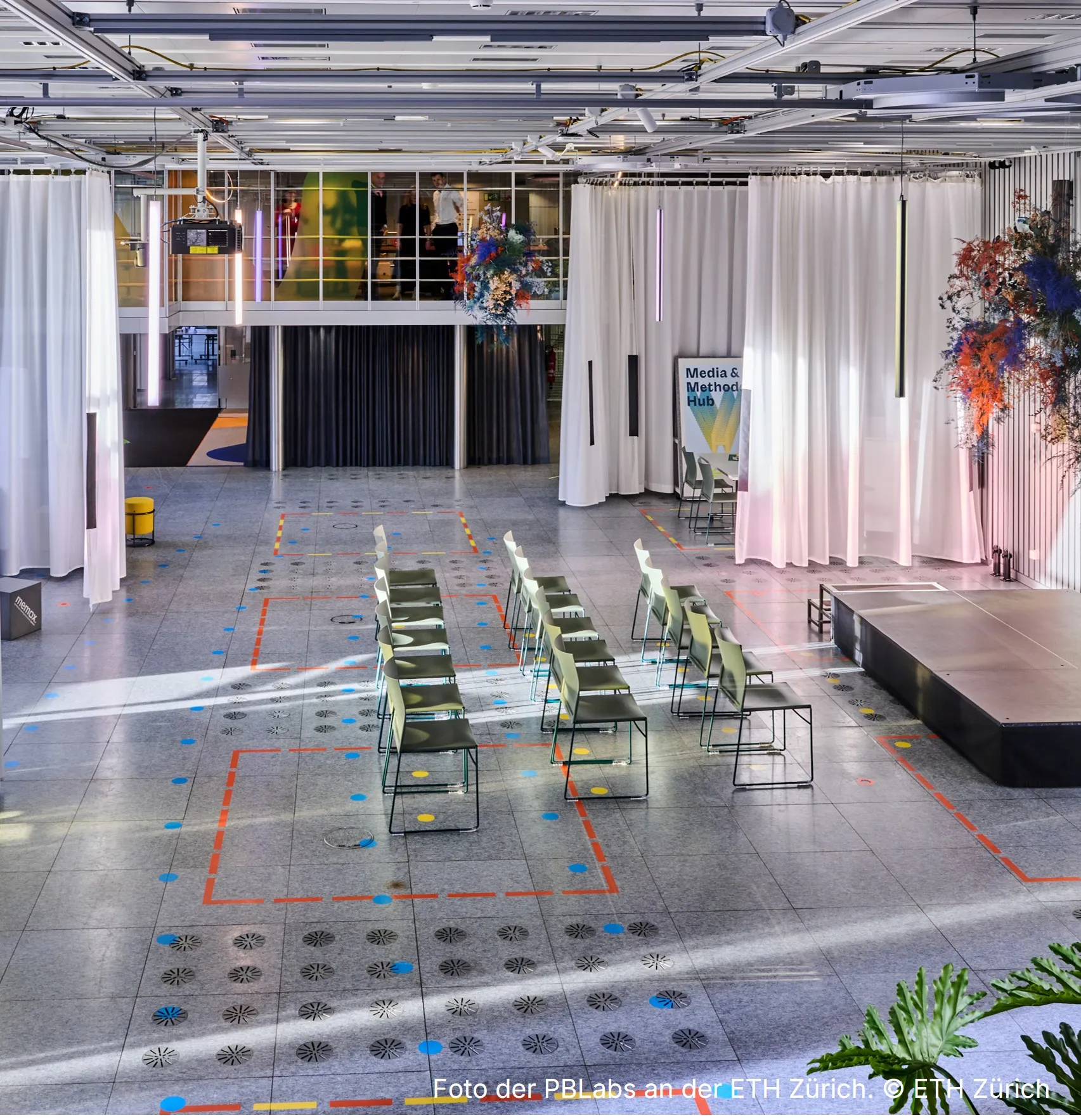
AISI is initially being developed for flexible learning environments, but could also be transferred to work, cultural, and collaboration spaces in the future. For November 2026, the implementation of AISI in the PB Labs at ETH Zurich and an accompanying study in a real learning space are planned together with ETH Zurich. In parallel, a collaboration with Vitra is planned. A key point of reference is the Vitra Beta approach, which understands work environments as continuously adaptable systems that are further developed by their users. AISI is intended to complement this approach with an intelligent spatial layer that perceives existing configurations and makes potential situational changes visible.
Role and Contribution
Johannes Pointner initiated and develops AISI as part of his doctoral research. His responsibilities include the research concept, spatial and interaction design, prototype development, system architecture, study design, and the coordination of institutional and industry collaborations.
-->