HOW CAN AI-DRIVEN CULTURAL SPACES RESPOND TO USER BEHAVIOUR?
ECHO – Immersive European Cultural Heritage Outreach is an ongoing European research and innovation project developing scalable and transferable approaches to immersive cultural mediation. Together with partners from ten countries, the two-million-euro consortium investigates how interactive technologies and new narrative formats can transform cultural spaces into responsive, personalised and collectively experienced environments. Its aim is not to produce a single exhibition or media installation, but to develop principles, methods and prototypical systems that can be transferred to different cultural institutions and social contexts.
Experimental Lab
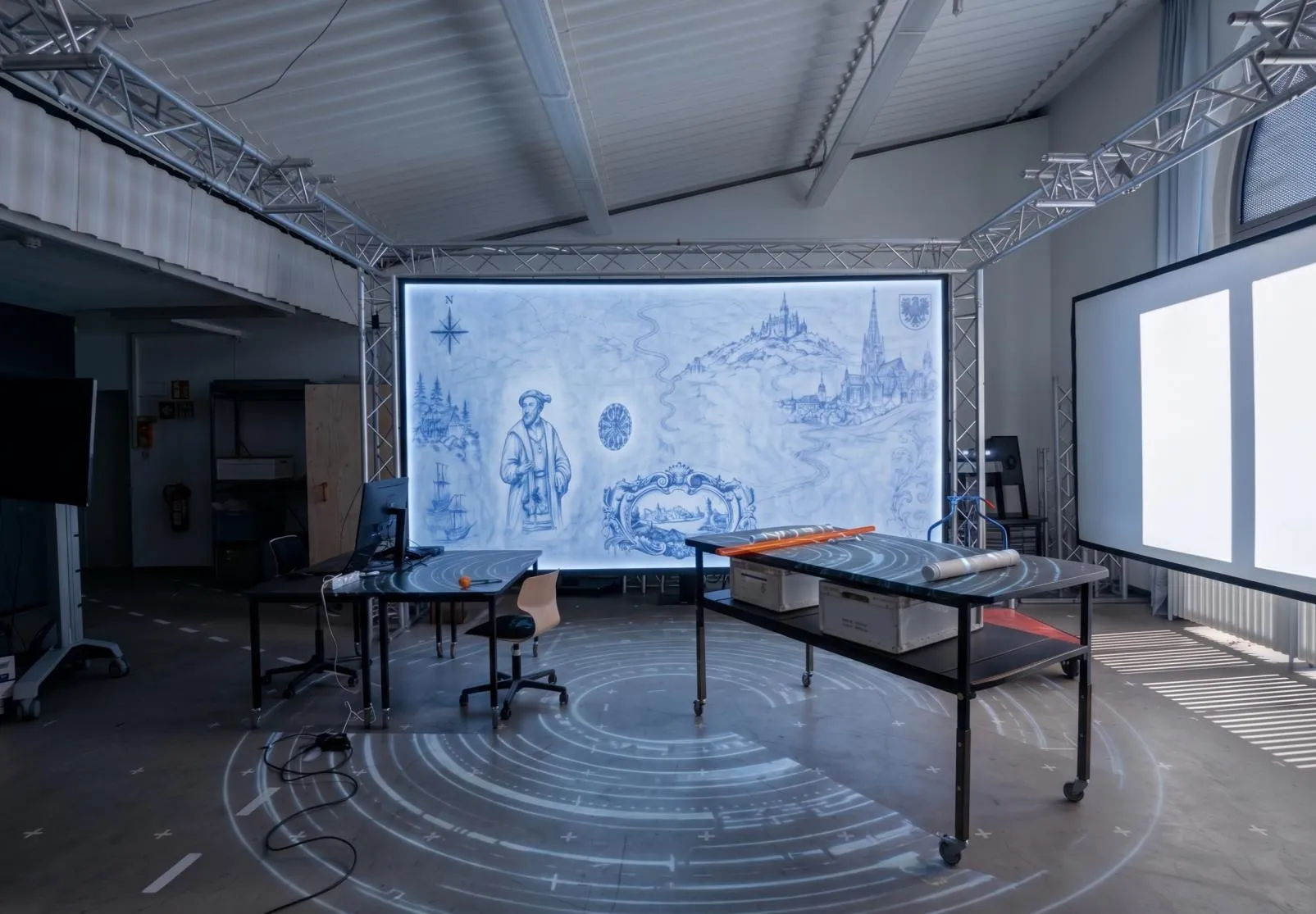
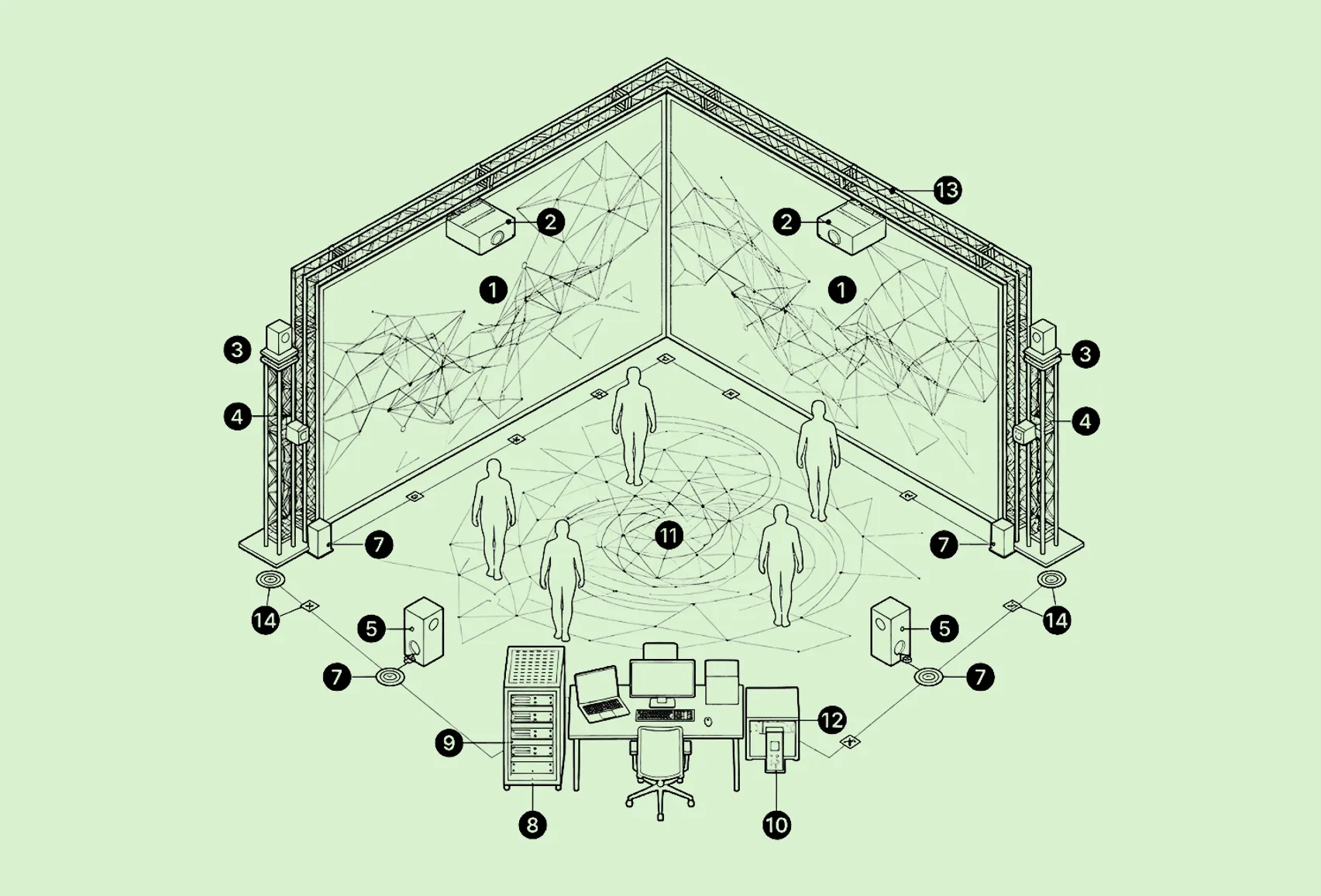
Within the project, Johannes Pointner conceives and co-coordinates the Experimental Lab at Design & Computation: a research environment for experience prototyping immersive interactions. He is responsible for the conceptual and technical development of the lab, its technical equipment and software architecture, as well as the planning and facilitation of tests and user sessions.
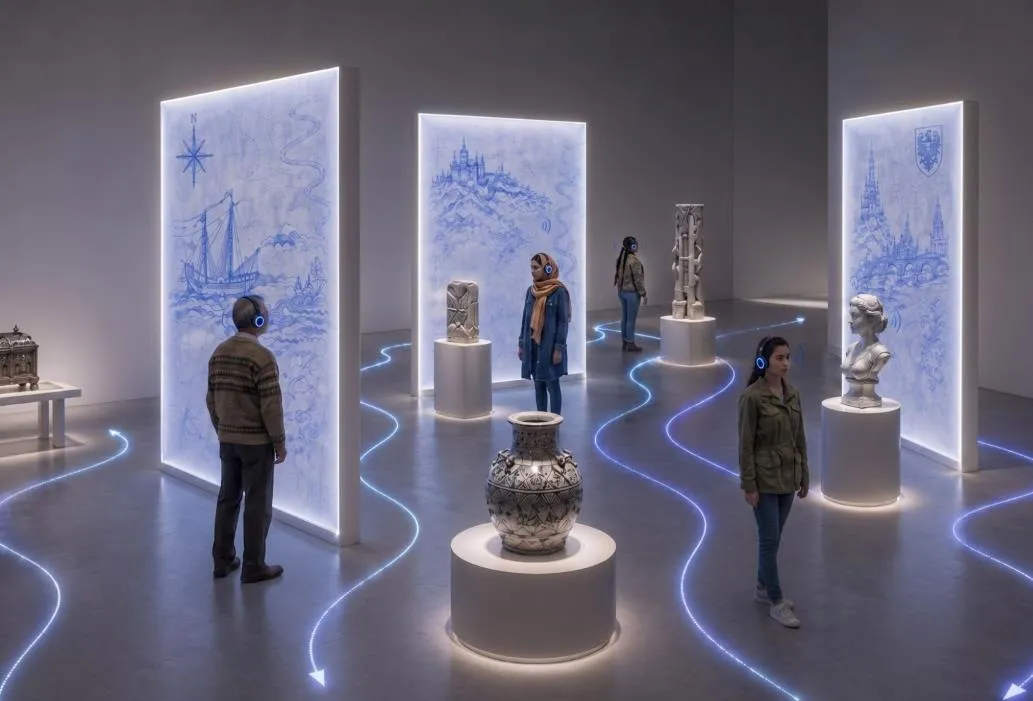
Responsive wall and floor projections, spatial tracking, audio and AI-based processes are combined into three interconnected layers of interaction: an auditory layer with spatially adapted sound, a visual layer of responsive media surfaces, and a collective layer that reacts not only to individuals but also to group formations and shared behavioural patterns. Accessibility is treated as a design dimension from the outset, including variable levels of intensity, reduced sensory overload, adaptable pacing and low-threshold forms of orientation.
Generative Immersion
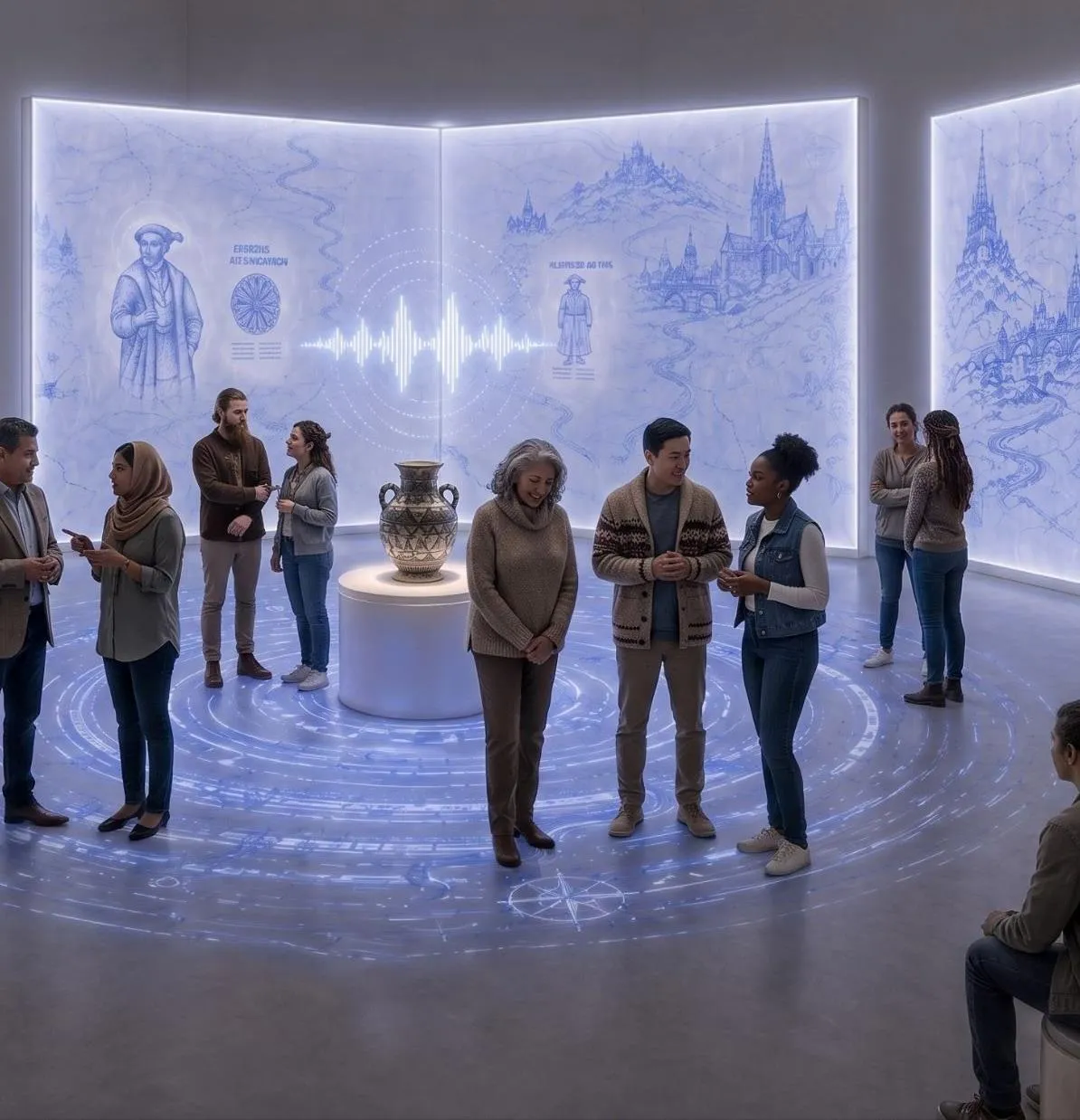
The conceptual framework is Johannes Pointner’s approach of “Generative Immersion”. Immersion is understood as a dynamic relationship between people, space and narrative: movement, proximity, paths, pauses and duration become inputs to which the environment responds through auditory, visual or narrative changes. AI does not merely personalise predefined content. It acts as an interpretative and generative layer that recognises situational patterns of behaviour and derives new spatial, narrative and collective responses in real time.
Research Through Design
The Experimental Lab is not simply the technical implementation of a predefined experience, but a research-through-design infrastructure. Only through designing and testing can the project investigate when people understand a change as a response to their behaviour, how individual and collective interactions can be coordinated, and when personalisation strengthens or fragments a shared experience.
ECHO translates an open research question into an experimental environment in which technological, spatial, narrative and social dimensions can be prototyped together and investigated empirically through situated experience.
Role and Contribution
Johannes Pointner develops the concept of Generative Immersion and leads the conception and realisation of the Experimental Lab. His responsibilities include spatial and interaction design, technical configuration, software architecture, equipment planning, accessibility audits, and the planning and facilitation of tests and user sessions.